Connect operational data to your accounting — included in LOUIS Assets and LOUIS Lands, not sold separately.
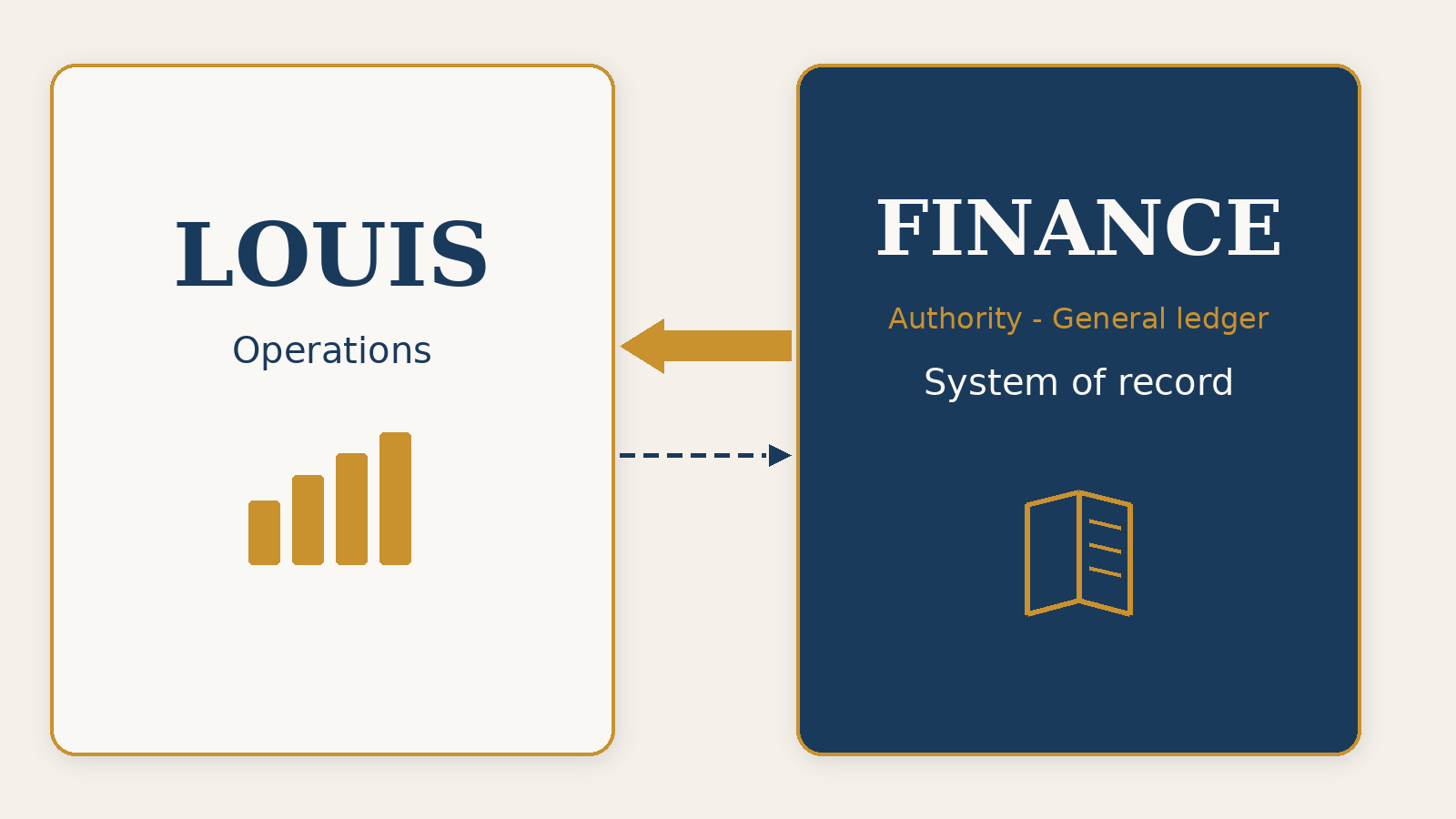
LOUIS is not a general ledger. Your accounting system stays the authority — the system of record.
Where connectors are available, financial data normally flows from finance into LOUIS so teams can see financial data without phone calls, emails or visits to the finance office. LOUIS can optionally submit data to finance but accounting stays the financial authority.
Click the asset — see work and cost in one place. The map, the ticket, and the spend stay tied together.
Housing and public works — maintenance costs, rent, capital spend connected to your GL where integrations are available.
LOUIS Assets →Development review and consultation — expense and revenue tracking tied to referral and review workflows.
LOUIS Lands →Organizations run different accounting platforms — ERPs, municipal general ledgers, and regional systems. LOUIS connects where connectors exist for your setup.
Ask us during a demo which integrations match your accounting setup.
Housing and maintenance teams are first contact for tenants and crews — they shouldn't need a separate office to confirm what already happened, or re-type invoices finance already has.
Where connectors exist, the goal is less re-keying for housing and public works — not a new workload for the finance team. Your general ledger stays authoritative.
Operations needs tickets and maps; finance needs ledger entries. In LOUIS, costs stay tied to the same asset record — work, cost, and map together — so integration doesn't depend on re-matching spreadsheets every month.
When leadership asks what was spent on an asset or project, the answer should come from connected data — not a manual merge.
Request a demo — we'll walk through operational costs and general-ledger connections with realistic examples. Training will be delivered using your data.